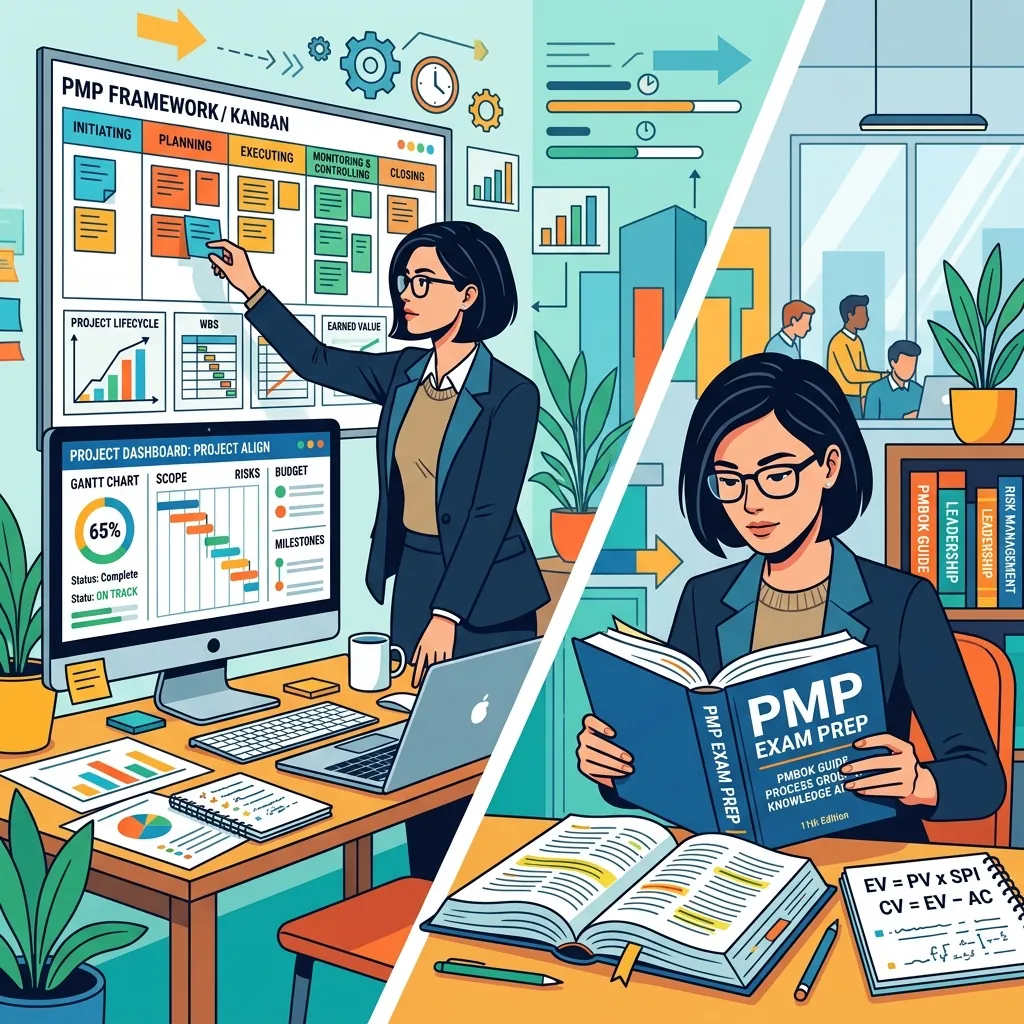
TL;DR: PMP prep is decision training
The best way to prepare for the PMP exam is to study the exam content outline, practice situational questions, understand predictive, agile, and hybrid approaches, and build a mistake log that explains why one project-management action is better than another. Lurner helps by turning PMI resources, notes, practice rationales, and your own project examples into a searchable, cited study workspace.
- Start here: confirm which PMP exam version applies to your test date and align every resource to it.
- Study deeply: focus on domains, scenarios, stakeholder judgment, risk decisions, agile thinking, and business outcomes.
- Use AI well: ask for source-backed explanations and practice rationales, not shortcut answers.
If you are searching for "how to prepare for PMP exam", you probably already know the challenge: the content is broad, the language is specific, and many questions feel like they have two answers that are almost right. The PMP is not a vocabulary quiz. It is a judgment exam for project leaders.
The mistake most candidates make is collecting resources without building a system. They watch a course, skim a guide, buy a practice exam, save a formula sheet, and then wonder why their practice scores swing. A stronger PMP study plan connects each resource to the decisions PMI is testing: what should the project manager do next, what should be escalated, what belongs to the team, what belongs to the sponsor, and what approach fits the situation.
First: avoid the wrong-version trap
PMP candidates should always check PMI's official certification and exam resources before planning. PMI has published a Project Management Professional Examination Content Outline for July 2026, and PMI product pages note a new PMP exam launching on 9 July 2026. If your exam is before that date, use resources aligned to the current exam. If your exam is after that date, use resources aligned to the July 2026 outline.
| PMP prep question | Bad answer | Better answer |
|---|---|---|
| What should I study? | Everything in every guide | The official exam content outline plus high-quality practice rationales |
| How do I improve? | Do more questions | Analyze why your chosen answer was less aligned with PMI logic |
| How do I use PMBOK? | Read it cover to cover once | Connect principles, processes, roles, and scenarios with citations |
| How do I use AI? | Ask for answer keys | Ask for source-backed explanations, contrastive rationales, and mistake patterns |
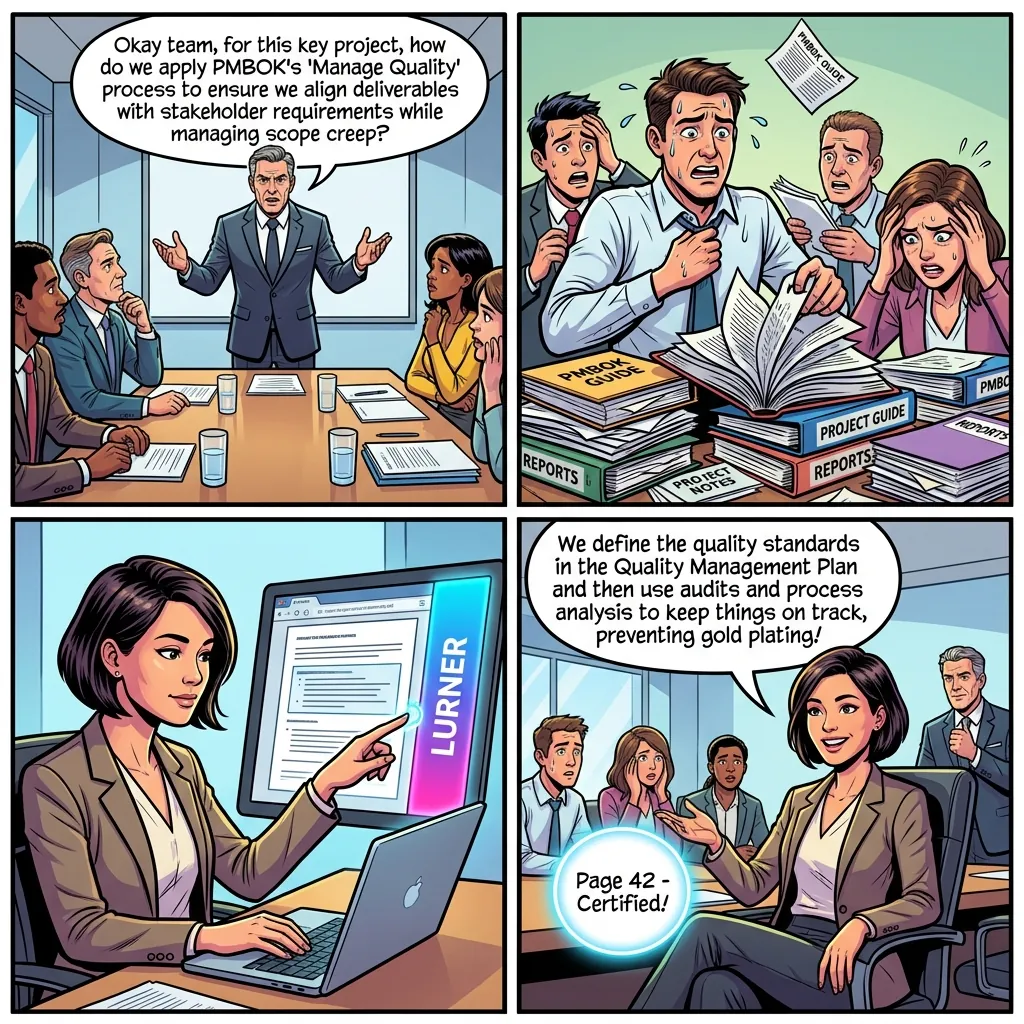
The PMP study system that actually compounds
Your PMP study plan should create reusable judgment. By the end, you should not only remember terms like stakeholder engagement, risk response, value delivery, servant leadership, or change control. You should know what a project manager would do in a messy situation and why.
- 1
Build the official outline map
Use the PMI exam content outline as your spine. In Lurner, add official resources, your course notes, and practice explanations, then ask for a domain map with weak areas and source citations.
- 2
Learn PMI decision logic
PMP questions often ask what the project manager should do next. Train the sequence: assess before acting, collaborate before escalating, follow governance, serve the team, manage value, and respect the project context.
- 3
Practice mixed scenarios early
Do not wait until the final week. Mix predictive, agile, hybrid, people, process, business, risk, quality, procurement, stakeholder, and team scenarios so you learn when each tool applies.
- 4
Write contrastive rationales
For every wrong question, explain why the tempting answer was wrong. PMP improvement comes from recognizing subtle differences between plausible options.
- 5
Connect concepts to real projects
Use anonymized project examples from your work: change requests, stakeholder conflicts, backlog tradeoffs, risk registers, retrospectives, and governance meetings. This turns exam language into usable judgment.
Turn PMP prep into a project workspace.
Use Lurner to organize PMI resources, course notes, practice-question rationales, and real project examples into one source-backed study system.
Build your PMP study vaultA realistic 8-week PMP study plan
Week 1: eligibility & resources
Confirm your exam date, version, eligibility requirements, and training hours. Build your source library and map every study resource to the official outline.
Weeks 2-3: domain learning
Study the major domains and approaches. After each section, answer short scenario questions and explain decisions in your own words.
Weeks 4-5: mixed practice
Start mixed question sets. Track wrong answers by concept, approach, and decision error: acted too fast, escalated too soon, ignored stakeholder, or missed governance.
Week 6: full-length simulation
Take a timed practice exam. Review every uncertain question, not only the incorrect ones. Uncertainty is a weak signal worth studying.
Week 7: targeted repair
Use your mistake log to repair high-impact domains. Ask Lurner for cited explanations and compare similar scenarios until the decision pattern is clear.
Week 8: exam readiness
Take one more simulation, review formulas and mindset rules, reduce new content, and focus on calm execution.
Prompt library for PMP prep with Lurner
Outline mapping prompt
"Map my uploaded PMP materials to the official exam content outline. Show covered topics, missing topics, and source citations."
Scenario prompt
"Create 10 PMP-style situational questions from this domain. After I answer, explain the best choice and why each distractor is weaker."
Agile vs. predictive prompt
"Compare how this situation should be handled in predictive, agile, and hybrid environments. Cite the source material used."
Mistake pattern prompt
"Here are my missed PMP questions and rationales. Identify the recurring decision errors and create a repair plan."
Sources and further reading
- PMI: PMP and CAPM Exam Prep - official PMI exam-prep resource hub.
- PMI: PMP Examination Content Outline - July 2026 - official July 2026 outline.
- PMI practice exam product note - PMI notes the new PMP exam launching 9 July 2026 and advises matching materials to the exam version.
- Carnegie Mellon: Retrieval Practice - learning-science background for active recall and practice-based study.
FAQ: how to prepare for the PMP exam
How long does it take to prepare for the PMP exam?
Many candidates plan 6-10 weeks, depending on experience, schedule, and baseline knowledge. The better measure is not weeks spent but whether you can consistently explain scenario decisions and practice rationales.
What should I study first for PMP?
Start with PMI's official exam content outline and certification resources. Then build your plan around domains, approaches, practice questions, and mistake review.
Can AI help me prepare for PMP?
Yes. Source-grounded AI can summarize resources, generate practice scenarios, compare agile and predictive logic, and analyze mistakes. It should support official materials, not replace them.
Is the PMP exam changing in 2026?
PMI has published a July 2026 PMP Examination Content Outline and PMI product pages reference a new PMP exam launching 9 July 2026. Candidates should verify current PMI guidance for their exact exam date.
Can Lurner use my real project documents?
Yes, you can use project notes, sanitized logs, lessons learned, stakeholder summaries, and study resources to build a searchable workspace. Avoid uploading confidential material unless you have permission and are comfortable with the data handling.